What is a Philanthropic Intermediary? A Guide for Funders
A philanthropic intermediary is an organisation that sits between funders and the groups they want to support. It takes money from trusts, foundations, philanthropists or public bodies and gets it to community groups, movements and projects. Along the way, it usually handles the due diligence, grant agreements, payments and reporting.
If you want to fund grassroots groups but your own rules or systems get in the way, an intermediary can get your money there. A growing share of giving now moves this way, so it’s worth knowing how intermediaries work and how to pick one that shares your values.
What Does a Philanthropic Intermediary Do?
An intermediary takes care of the admin and legal work that often stands between you and grassroots groups. What that looks like depends on the organisation, but most do some mix of the following:
- Finds groups for you to fund, using local knowledge and networks you may not have.
- Checks that groups are who they say they are, through due diligence.
- Signs the grant agreement and takes on the legal responsibility that comes with it.
- Holds the money and pays it out, in the UK or across borders.
- Designs grant processes that work for grassroots groups, from small volunteer-led projects to large, fast-moving movements.
- Pulls together the financial reporting you need.
- Feeds what it learns from communities back to you.
Some intermediaries only move money. Many go further, offering advice, capacity building and a route for communities to shape how money gets spent.
Types of Philanthropic Intermediary
‘Intermediary’ covers a wide range of organisations. These are the ones you’re most likely to come across.
|
Type |
How it works |
Consider it if |
|---|---|---|
|
Community foundation |
Pools money from local donors and makes grants in a set area, such as a city or county. |
You want to give in one place |
|
Pooled or collaborative fund |
Several funders put money into one pot around a shared issue, and the fund makes the grants. |
You want more reach on an issue than you’d get alone |
|
Intermediary funder or regranter |
Receives a large grant and breaks it into smaller grants for local groups. |
You don’t have networks in the area you want to fund |
|
Fiscal Host |
Holds money for groups that aren’t legally registered, signing grant agreements on their behalf. |
You want to fund groups that aren’t legally registered |
|
Donor-advised fund |
A donor gives to a fund run by a provider, then recommends grants from it over time. |
You give as an individual and want to spread grants over time |
|
Giving circle |
A group of people pool their own money and decide together where it goes. |
You want to decide where money goes with other donors |
Many organisations play more than one of these roles. Pooled funds are also on the rise: in Bridgespan’s survey, more than half of funder collaboratives were founded after 2010. A Fiscal Host can hold a pooled fund’s money as a neutral party and take on the admin, due diligence and grant distribution.
Why Funders Work Through Intermediaries
You probably want to reach the groups doing the work, but your own rules often get in the way. You might only be able to grant to registered charities, need a bank account in the group’s name, or have a board that’s wary of funding an informal group. An intermediary holds that structure for you.
It’s a big part of why funders come to us. In our 2021 survey, every funder who responded said working with The Social Change Nest let them consider unincorporated grassroots groups as grantees. And 80% said it encouraged them to make deeper shifts to their funding policies or models.
Intermediaries also take on work that’s hard to do from a distance. Running hundreds of small grants needs staff, systems and local contacts. A good partner handles that for you, and can often move money faster than a long grant cycle allows, which matters when there’s a sudden crisis.
Local knowledge is the other big draw. Comic Relief’s UK Intermediary Funders initiative worked through four intermediary funders, one in each UK nation, to get more money to small grassroots organisations and give communities more say in grantmaking.
What It Means for the Groups You Fund
Many grassroots groups never make it onto a funder’s shortlist. They aren’t registered charities, they don’t have a bank account in the group’s name, or they can’t produce the policies and accounts a standard application asks for. That’s true of small volunteer-led projects, and of large, fast-moving humanitarian, political and environmental movements too.
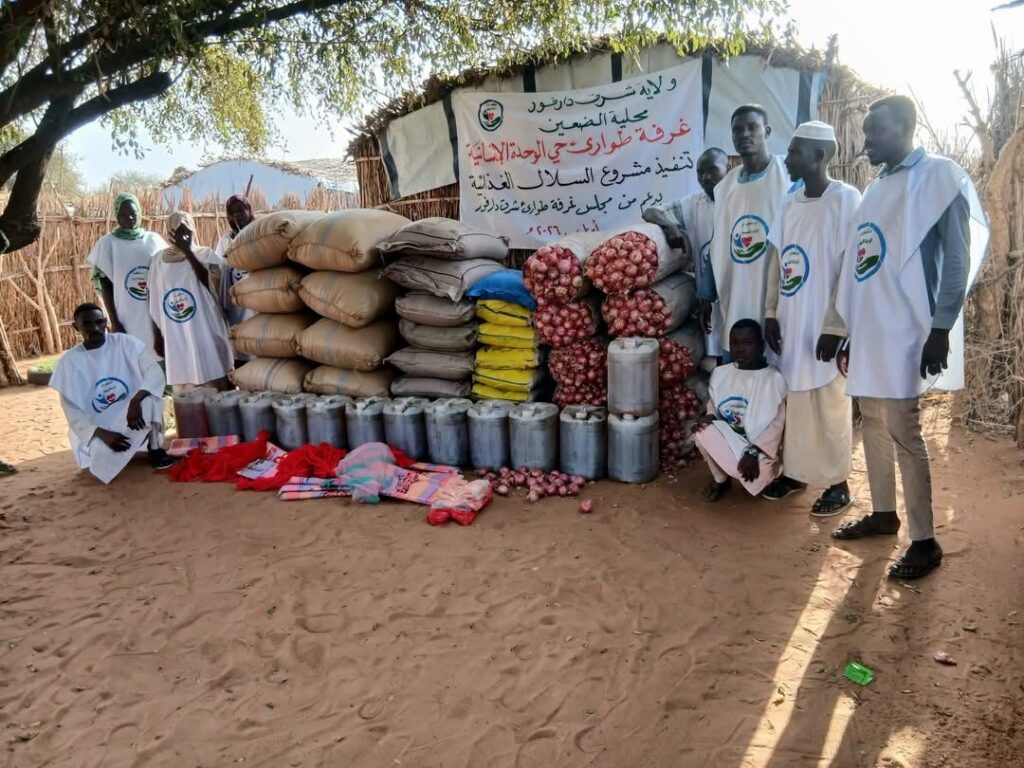
Take the Sudan Emergency Response Rooms, a network of more than 2,100 decentralised groups and around 26,000 local volunteers responding to the humanitarian crisis in Sudan. We fiscally host them, and they’ve been nominated for the Nobel Peace Prize three years in a row.
A Fiscal Host like The Social Change Nest removes those barriers. We sign the grant agreement as the group’s agent, then receive and hold your grant on its behalf. The group keeps running its work its own way and decides how the money gets spent, while we handle the payments and paperwork. You get a legally registered partner to contract with.
Groups don’t need to incorporate to receive your funding. Some choose to later on, and we support them if they do. Others never need to. If you’re weighing up the risks, our blog on the biggest myths about funding grassroots movements is a good place to start.
One group we host put it simply in our 2024 Impact Survey: “We basically wouldn’t be able to exist as-is without The Social Change Nest.”#
How The Social Change Nest Works as an Intermediary
The Social Change Nest is a Community Interest Company (CIC) and a Fiscal Host. We launched in 2020, when mutual aid groups were springing up during the covid-19 pandemic and needed somewhere safe to hold their money. Since then, we’ve moved over £50M to community groups and changemakers. We’ve supported more than 600 grassroots groups and worked with groups in 70 countries across six continents.
We shape our support around what you want to fund and how hands-on you want to be. Funders usually come to us when they want to:
- Fund a grassroots group that can’t take a grant directly. We sign the grant agreement as the group’s fiscal agent, hold the money and help with reporting.
- Run a grant programme for grassroots groups, in the UK or across borders. We help design it, carry out due diligence and get money to groups and individuals without bank accounts.
- Hand over a fund entirely. We take care of the whole grantmaking process for you.
- Pay individuals for their involvement in your work.
As a Fiscal Host, we also hold money for pooled and collaborative funds as a neutral party, and take on the admin, due diligence and grant distribution. We host regranters too, helping them both receive grants and distribute them around the world.
Groups manage their money openly on Open Collective, and where we hold a grant on a group’s behalf, you get detailed transaction logs showing where every pound goes. We take on risk so others don’t have to, including work that’s traditionally seen as high risk. Our approach to risk sets out how we do it.
We’re members of funder networks including the Association of Charitable Foundations, London Funders, Philea and WINGS. US funders can rely on our NGO Source equivalency determination.
How to Choose a Philanthropic Intermediary
Intermediaries vary a lot in how they work and whose interests come first. Ask these questions before you choose one.
- Who makes the decisions? Ask how much say grantees get over how money is spent, and whether the intermediary shares power with communities or simply passes funders’ priorities down the line.
- What does it cost, and what does the fee cover? There’s no single industry rate, but Fiscal Host fees typically fall between 5% and 15% of the funding, depending on how much support is included. Our fee for funders is bespoke, from 8–15%, based on what you need.
- How close is it to the communities you want to reach? Look for a track record with groups like the ones you want to fund.
- Can you see where the money goes? Layers of intermediaries can make funding harder to trace, so ask what reporting you’ll get.
- Can it pay across borders? If you fund internationally, check its experience with overseas payments and compliance.
- What happens when the grant ends? With us, groups typically continue to receiving support and winning further grants.
Philanthropic Intermediaries: Your Questions Answered
What Is a Philanthropic Intermediary in Simple Terms?
It’s an organisation that links funders with the groups they want to fund. It takes in money from trusts, foundations, donors or public bodies and gets it to community groups. It often handles the due diligence, contracts, payments and reporting so neither side has to.
Is a Fiscal Host a Philanthropic Intermediary?
Yes. A Fiscal Host is one type of philanthropic intermediary. It holds money on behalf of groups that aren’t legally registered and acts as their agent, signing grant agreements so they can receive funding. The Social Change Nest is a Fiscal Host for more than 600 grassroots groups.
What’s the Difference Between an Intermediary and a Regranter?
Regranting is one thing intermediaries do. A regranter receives a large grant and breaks it into smaller grants for other groups. ‘Philanthropic intermediary’ is the wider term, covering regranters, Fiscal Hosts, community foundations, pooled funds and more. The Social Change Nest also fiscally hosts regranters, supporting them to both receive grants and distribute them to groups around the world.
How Much Do Philanthropic Intermediaries Charge?
Fees vary with what the intermediary does for you. There’s no single industry rate, but Fiscal Host fees typically fall between 5% and 15% of the funding, depending on how much support is included. The Social Change Nest charges funders a bespoke fee of 8–15%.
Can I Fund an Unincorporated Group Through an Intermediary?
Yes, and it’s one of the main reasons intermediaries exist. A Fiscal Host receives your grant, signs the agreement as the group’s agent and holds the money on the group’s behalf. You contract with a legally registered organisation, and the group doesn’t have to register as a charity or company.
Is The Social Change Nest a Charity?
No. We’re a CIC, so we work on a not-for-profit basis and an asset lock means our income gets reinvested. Because we’re not a charity, donations to the groups we host can’t claim Gift Aid.
Does an Intermediary Take Control of a Group’s Money?
It depends on the intermediary. In most cases, The Social Change Nest acts as the group’s agent. The group keeps control and decides how to spend its money, while we hold the funds, process payments and help with reporting.
Let’s Get Funds to the Frontlines
If you’re a funder who wants to reach grassroots groups, get in touch with our team. We’ll talk through what you want to fund and find the set-up that works for you.
Need to bring your board with you first? Download our free guide, ‘How to talk to your board about risk‘.