SUDAN EMERGENCY RESPONSE ROOMS NOMINATED FOR A NOBEL PEACE PRIZE. HERE’S WHY IT MATTERS.

For us, mutual aid has never been an afterthought. It’s the basis on which our work as a fiscal host has been built and shaped. We wanted to know what it would look like if funding infrastructure was built for radical solidarity, rather than making communities fight to access the support they need, so we built it. 


That’s why seeing one of the groups we support nominated for the Nobel Peace Prize for the third consecutive year is very important to us.


Who are the Sudan Emergency Response Rooms?

Sudan Emergency Response Rooms (ERRs) are Sudan’s grassroots humanitarian response, fully built and led by local Sudanese volunteers, serving as a support system for communities living through the world’s largest humanitarian crisis. 


They are made up of more than 2,100 small, decentralised groups, with around 26,000 local volunteers, all active around the country, including in the most conflict-affected areas of Darfur, the Kordofans, and the Nuba Mountains. Their work goes beyond providing emergency supplies. These volunteers are there to respond to what their communities need as those needs emerge. 


According to the United Nations, over 33 million people are in urgent need across Sudan. This means that over 62% of Sudan’s population are in need of humanitarian assistance, with 41% facing high levels of acute food insecurity, and 14 locations across North Darfur, South Darfur, and South Kordofan at risk of famine.


Since the conflict began in April 2023, the ERRs have assisted millions of people. Their response includes running communal kitchens, supporting health centres and hospitals, repairing water wells and pumps, helping civilians evacuate areas of intense fighting and supporting displaced people as they settle into host communities. They also provide psychological and financial support to survivors of gender-based violence. 


Crises don’t happen in isolation. Different aspects of life are oftentimes connected, and the ERR volunteers are equipped to be able to see those connections and respond to them in real-time. The Women’s Response Rooms (WRRs), part of the wider ERRs movement, are a powerful example of this approach. Led by Sudanese women, they respond specifically to the needs of women and girls, providing reproductive health information, women-focused hygiene kits and training for income-generating activities. They create spaces where women can organise, support one another, identify what their communities need and play an active role in shaping the humanitarian response around them. 


The ERRs are also helping communities form the relationships and networks that make a response possible in the first place. People know who needs help, who can provide it, where resources are needed and how to bring others in. That local knowledge is difficult to replicate from the outside, and it is one of the reasons community-led responses can adapt so quickly when circumstances change.


Why does mutual aid work matter?

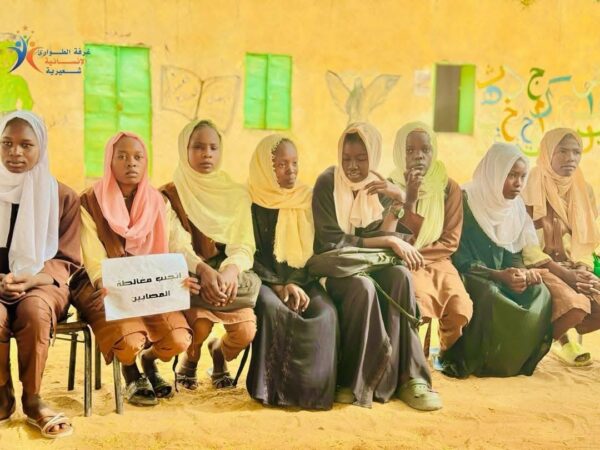
A group of women, sat at an ERR in Sudan

When a crisis hits, the first person to respond is the one closest by. The people best placed to understand what a community needs during difficult times are often the people already living there. This is why Sudan ERRs and other similar local organisations around the world are able to play such an important role: they’re not guessing what the community needs from outside the crisis; they are experiencing it.


Compared to local groups, it often takes humanitarian agencies significantly longer to get aid on the ground during crises. A Start Network report shows that 95% of community-led assistance arrived at the right time, compared with 53% of international-led assistance. ERRs volunteers are among the first to respond when a crisis hits, reaching areas that are difficult or impossible for traditional humanitarian agencies to reach. 

Communities as partners, not just recipients

Mutual aid is not a new, emerging system. Communities around the world have relied on collective action, local knowledge, skills, and resources to respond to crises and recover from disasters for millennia. Supporting mutual aid efforts can strengthen communities while allowing assistance to reach people quicker and, in many cases, at a lower cost than traditional humanitarian models.
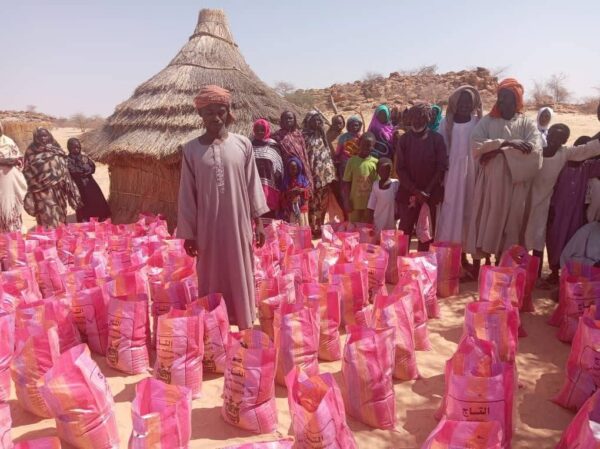
 

A sea of pink bags full of needed supplies that have been put together for a community by Sudan ERRsMutual aid in Sudan has deep roots in the cultural concept of nafeer – collective action, in which community members come together to support one another. When the conflict broke out in April 2023, existing networks and neighbourhood committees mobilised young volunteers to provide assistance within their own communities.


So what are the Sudan Emergency Response Rooms doing differently? 


What is striking about the ERRs is the scale at which they have been able to organise. Thousands of small groups are able to share information, communicate priorities, mobilise resources and keep track of what’s being delivered across the different communities. 


This creates a different relationship with humanitarian assistance, where the communities aren’t simply being asked what they need so that someone can externally make decisions. It’s the communities themselves who can be the decision-makers, organisers and first responders, leveraging their knowledge and networks to identify priorities and act quickly. 


The ERRs represent a new model for civil society action, rooted in community leadership, collective responsibility, and local participation. The ERRs are not only responding to the immediate crisis; their local networks, knowledge, and relationships will also be essential to Sudan’s recovery and reconstruction when the war ends.

Rethinking the Humanitarian Ecosystem

Around the world, mutual aid groups find it difficult to access the resources, infrastructure, technical expertise and funding they need to do their work at a large scale, whilst larger humanitarian organisations can struggle to reach communities with the same level of local knowledge, trust and access that mutual aid groups have. When working together, their strengths can complement rather than compete with each other. 


So why are funders still pouring most of the funding into larger, international organisations? 


ODI Global’s 2026 research report shows that less than 10% of international humanitarian funding reached local and national actors, directly or indirectly, which is far below the 25% target. They also saw a de-prioritisation in funding local and national actors, with local organisations receiving shorter, smaller and heavily earmarked grants when compared to international organisations. 


At The Social Change Nest, we often see  funding systems that are designed around the characteristics of established international organisations, excluding unincorporated grassroots organisations from direct funding opportunities because of compliance requirements.


Instead of asking grassroots organisations to fit into systems designed for larger organisations, funders can adapt those systems around the realities of locally led groups. 
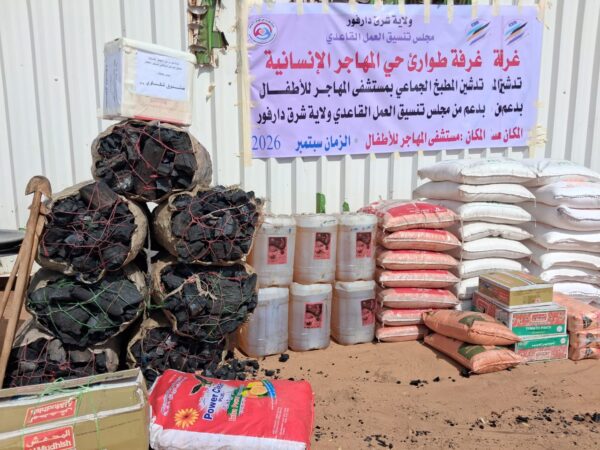
 

Piles of supplies such as charcoal, soil, and foodFunders can:

  • Make funding work for the realities of locally led organisations by removing unnecessary layers.
  • Build funding routes that unincorporated grassroots groups can actually access, including through trusted intermediaries like a fiscal host.
  • Offer organisations more flexible, unrestricted funding.
  • Share the risk with local organisations rather than shifting it.
  • Assess risk in proportion to the organisation, grant and context.
  • Fund the people and the infrastructure, not just the end project.
  • Build longer-term relationships instead of only showing up when there’s a crisis.
Why this nomination matters

The ERR mutual aid model has helped to turn humanitarian work – and people’s perceptions of how to effectively deliver it – on its head. This nomination deserves to be celebrated for what it is. Being nominated for the Nobel Peace Prize for the third consecutive year is an extraordinary acknowledgement of the impact that the Sudan ERRs are making, and we are deeply honoured to be supporting their work. 


Global recognition of mutual aid work challenges the idea that impactful humanitarian action can only come from established institutions. We often hear how funders can sometimes be too risk-averse, being concerned with accountability, due diligence and a lack of audited accounts. This can lead to them preferring to fund established and international NGOs.


Global recognition like the Nobel Peace Prize nomination can help shift some of these power dynamics by putting visibility, leadership, and the community-driven impact of mutual aid groups at the forefront. This can, in turn, make it harder for grassroots groups to be dismissed as too small, informal or risky to support, helping them be listened to and supported. 


You can support the Sudan Emergency Response Rooms through their Open Collective page. The funding will go directly to ERRs activities such as food assistance, water, healthcare, evacuation, shelter, communications, cash assistance and working toward recovery.

Think we could be the right fit for you?

We’re always open to helping humanitarian and mutual aid groups doing this work, and would love to explore what that support could look like for your group.

Want to fund Nobel Peace Prize worthy work like this?

If you’re a funder looking to support mutual aid groups, be it locally or internationally,  we’d love to discuss how we can help you get your resources to where they’re needed.

Recommended reading from our blog

BULLS***T BINGO. An important announcement from the Association of Charitable Charities for Good Causes

Power and Prosperity in Place

A diverse group of people take part in a Peoples Economy workshop