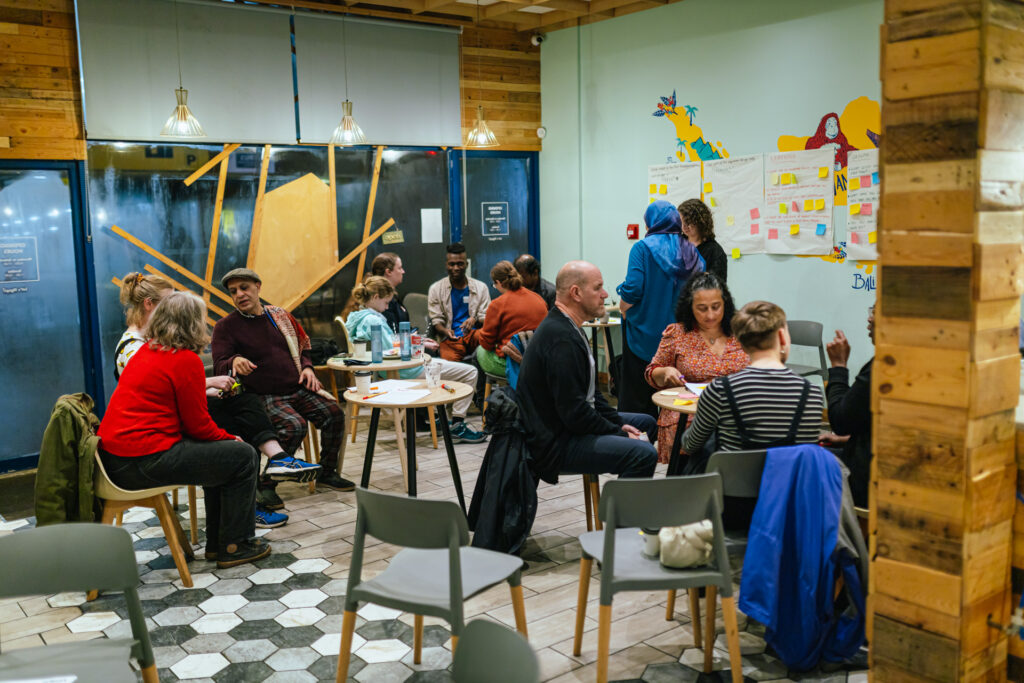
WHY WE’RE BORED OF HEARING ABOUT PLACE-BASED ORGANISING LIKE IT’S A NEW HOT TAKE

You can’t attend a philanthropic event without hearing the words ‘place-based organising’ at least once an hour this year. It’s all over newsletters, blogs, podcasts and agendas. We know we’re at it too, but The Social Change Nest has been championing community and place-based movements for a long time. 


So what’s brought it to the forefront of everyone else’s attention?


Here at The Social Change Nest, we define place-based organising as work that is aimed at creating change within a specific community or geographical area. People within the community itself create or work with organisations or funders by contributing their lived experiences to influence decisions.


Back in 2020 at the height of the pandemic, local organisers and community mutual aid groups reacted with speed and kindness to get food, medication and other supplies to their neighbours. The Social Change Nest launched to support them with transparent money management, and within two years we had channelled over £5M in grants and donations to those on the frontline. Mutual aid and place-based giving were on full display, and the world could see the great work being done alongside the amazing benefits that community engagement could bring. So why didn’t more funders help these groups to transition out of the pandemic and continue to build their movements at the time?


Outside of philanthropy, local community groups have continued to rise, with younger generations seeking comfort and real life connections outside of their digital devices. You probably know someone who’s part of a run club, joined a craft group, or talks about their ‘daylife’ activities (‘daylife’ focuses on the social aspects of wellness, both mental and physical, as a way to meet people and feel connected). The rise in popularity of attending community activities amongst a younger generation has provided the perfect opportunity to market more impact focused groups, offering the same local connection whilst providing a wider social impact. 


Paired with the current political climate, multiple wars, the climate crisis, the rise of division, poverty, and far right ideals, community responses are needed now more than ever. We’ve seen time and time again that place-based groups are able to react fastest in times of crisis. The funding ecosystem seems to have caught on in theory, but not always in practice. After years of talking about it, we’re starting to see a trickle of updated funder policies slowly start to turn the tide, but it’s not happening at the speed we need for these wonderful, resilient place-based groups to sustainably grow.

What’s not working


Unfortunately, a lot of a group’s success is tied to funding. Often groups may start as likeminded volunteers investing some of their own money and raising donations through small events, but eventually they need more funding to move to the next stage.


More traditional funders see these small unincorporated groups as an administrative burden. Vetting a grassroots organisation can be viewed as more time consuming, higher cost and less of a worthy investment, especially if the grant being given is smaller in the first place. Using a fiscal host like The Social Change Nest can alleviate this burden, as we do the due diligence checks and provide grantees support with their governance, policies and more. 


Place-based groups also often fall at the risk assessment hurdle. Local community groups don’t always fit the normal risk guidelines or adhere to the funder’s proof of concept, so they are automatically rejected when applying for funds. They may be seen as too risky because they need more support, they don’t have their own bank account, or they lack formal paperwork and records. 


At The Social Change Nest, we approach risk differently, and we shoulder some of the risk that would usually fall on the funder or group. By holding the funds, helping with monitoring and reporting, and providing resources and learning through The Community Nest, we support groups through the grant process. We also continuously improve and adapt our risk approach as the ecosystem around us changes, and we’ve built our processes with a trauma-informed and human approach.


You can read our myth busting blog on some of these aspects here.


Paired with strict reporting deadlines, restrictive reporting methods, and grant cycles that are too short to always show the full impact of a localised project, place-based groups are often seen as not sustainable or replicable, but we know that’s not true. Funders are overlooking and missing out on amazing groups making huge changes in their communities.


It works. We’ve got the proof to back it up.

The London Giving Movement is probably the most well known example of the place-based model, and for good reason. We are particularly close to this as Esther Foreman, our CEO, is part of the steering group for Brent Giving, which The Social Change Nest incubates.


Brent Giving is the newest addition to the London Giving Movement. In their first year, they raised £1M from local businesses and launched a funding round to distribute it to local projects. They also trained a group of Brent residents to be ambassadors and make the decisions that directly affect their community. This ambassador group read every funding application and decided on who was awarded grants. They awarded over £85,000 across 10 projects, and the ambassadors gained new skills, connections and confidence.


“Residents know which project on which estate is quietly changing lives, because they live right next to it.” – 2025 Ambassador Panel Member. 


This is just the beginning for Brent Giving, but other London Giving movements, such as Islington Giving and Camden Giving, have been operating similar participatory grant making models and showing how successful they can be for many years. 


Similarly, Gateshead Community Bridgebuilders have invested their time and funding over the last four years into building capacity, relationships, and skills within their local communities. They employed ‘bridgebuilders’ – people who were already incredibly active in helping their local communities voluntarily – to help build their skills and more of an ecosystem around localised groups. By valuing local input and knowledge, these bridgebuilders achieved amazing results and cemented themselves in the community.


A perfect example of this is one of the Bridgebuilders bringing together 14 different African Diaspora communities through  sports. There were many potential pitfalls and hurdles, but the Bridgebuilder created a thriving network and safety net through their own knowledge and awareness of the ecosystem.  


Richard Gibbons, from Gateshead Community Bridgebuilders, said that “Bridgebuilders have built motivation and confidence. The ripple effect is hard to measure, but people in the community are now able to say, ‘after doing this bit of work, I’m now doing this’ as they’ve learnt a skill. Seeing that happen is really rewarding.”


They have also helped community groups grow into their own CICs or charities by providing them with support and giving them time to work through all the questions and red tape. Helping with infrastructure, governance, and a nourishing approach to interacting with existing broken systems, the communities they support have been able to think about what they can positively impact and the best way to do it. 
 

This is why we can’t believe that place-based organising is still being spoken  about like it’s the new hot topic. Groups have been doing this and doing it very well for many years. It’s possible that this work takes longer, and the results may not be seen straight away, but the proof is now here! Perhaps that’s why place-based groups are being talked about so much more? Is it because the impact and results of such groups have become clearer and therefore less ‘risky’ to fund? Or is it because there is now more of a blueprint to follow and replicate, thanks to the already successful place-based programs? What we do know is that we need funders to expand their selection processes to accommodate these groups. 

 

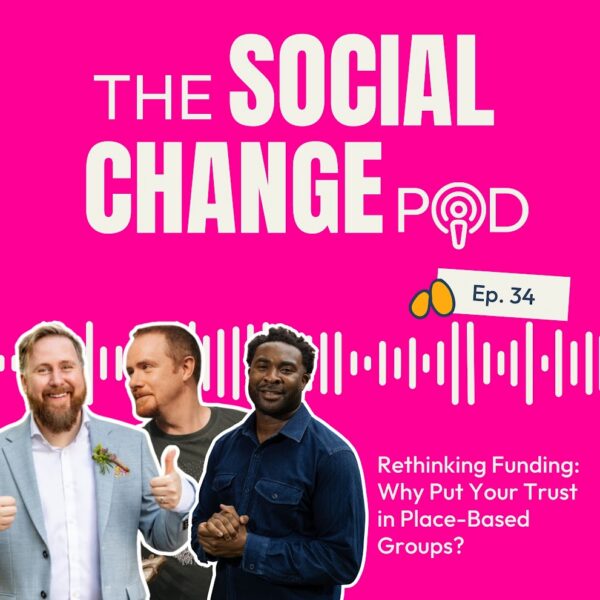
You can listen to our podcast episode with Elijah Williams from Brent Giving and Andy Crosbie and Rich Gibbons from Gateshead Community Bridgebuilders for more information on their successes.

What do we recommend?

  • Invest time and money in listening to those on the ground. Place based groups provide diverse perspectives, approaches and ideas. Those impacted by a problem should be consulted and involved from the very beginning of the process, and they should be paid for their time. You can read our Payment for Involvement Guide to find out more about this, and find information about how this impacts benefits in our Payment for Involvement Job Centre Toolkit
  • Provide core funding. Restricted funds have a time and a place. Many groups need unrestricted core funding to get off the ground. They need a venue to meet at and, therefore, will have rent or hire costs to pay. They need IT security, insurance, utilities, running expenses and sometimes staff. By funding just 1 project, it’s hard for the group to predict their future or feel like what they’re doing is sustainable.
  • Provide training. Give members of the community the training they need as they go. If your risk assessment is saying you can’t provide place-based groups with funds because you’re not sure about their governance, train them on governance infrastructure and policy. If you think their decision making framework isn’t robust, provide a workshop on different methods. The people you train will be able to train others. The skills can be transferred into their work life and further into their community. People will become more confident, engaged and passionate. The impact training has is much larger than just those attending, it is felt in an outwards ripple effect to those in the surroundings. If you invest in local people with knowledge of the area and problems, they will be able to continue leading change.
  • Offer alternative reporting methods. Video updates. Regular informal check-ins online or in person to help the project along, rather than assess any problems after the fact. Voice notes. Group workshops collecting post-it notes from all participants. Photos. Creative art presentations. The world is your oyster, and the output should be what best suits the group/grantees, not a form that takes hours, which  can’t show the diverse impact being made. 
  • Reporting over longer periods of time. So the group has achieved their impact of planting trees in the first year. They put it in their report, and the funder ticks it off as successful. What’s the impact in a year’s time? 5 years? Has the temperature reduced in that area? Has more wildlife returned? Have more people begun to enjoy the area because of the shade and nature? The ripple effect of impact is often felt for much longer than a standard reporting period, or it has not yet come to its full effect. So why limit reporting to a timeline that doesn’t suit the project? 
  • Connect people. Relationship building is key. Offer to connect grantees/groups with others who have done a similar thing in a different area, other local groups, businesses or charities who might be able to offer advice or resources.

Want to join the conversation?

If you’d like to discuss community responses to crises and place-based giving further, why not join us at the Wild Times Gathering in Birmingham on the 15th of September? We’d love to see you there!


If you’re a funder and this has got you thinking about how you could make your funding more inclusive and aligned with how impact shows up in practice, please reach out to aroa@thesocialchangenest.org 


Recommended reading from our blog

Funding Change: Why Movements Need Flexible and Long-Term Funding

Why does traditional philanthropy rely so heavily on rigid, transactional controls, and how is that micro-management stifling real, systemic change?

A Week in Oxford: What Resonated at Marmalade Festival

An image showing the Oxford Scenery