How to Build a Social Innovation Framework: Lessons From Our Intern
Every idea goes on a little journey, whether we realise it or not. We form them, test them, and rethink them as we go. A Social Innovation Framework helps give that process a natural path, making sure your ideas are tailored to the community you are trying to support.
Last summer, we had the pleasure of welcoming five interns to The Social Change Nest. Each of them brought fresh energy, thoughtful questions, and a genuine interest in how we work with grassroots groups.
Yiqi joined us as our Innovation Intern and spent her time getting to know how each team within The Social Change Nest works and how our ideas develop. Through different conversations, reflections, and her own creative curiosity, she designed a Social Innovation Framework.
What is a Social Innovation Framework?
A Social Innovation Framework is simply a step-by-step guide that gives you the questions you need to move a new idea forward, especially when you’re trying to address a social challenge. It walks you through understanding the problem, exploring what’s possible, testing ideas, and shaping something that can grow over time.
When you hit an obstacle, the Framework also shows you where to go next, making it easy to move your idea forward with the tools that you have and making the process feel more manageable.
Why Do You Need a Social Innovation Framework?
In Yiqi’s own words, “Innovation isn’t always about creating something brand new or tech-driven. Sometimes, it’s about rethinking how systems are built to shift power dynamics.”
As she was doing her research, Yiqi saw how valuable a flexible framework could be for the team. In a fast-paced environment, where projects constantly evolve in response to emerging needs, it’s easy to rush ahead with new ideas without taking the time to pause and reflect. A Social Innovation Framework builds that pause in, helping organisations stay thoughtful and responsive.
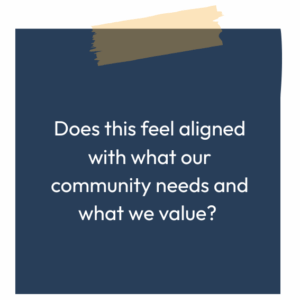
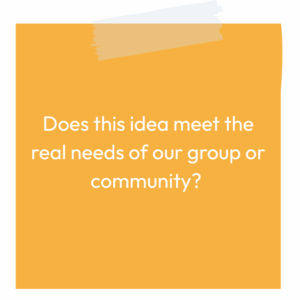
This can be especially useful for grassroots groups. A framework gives you a simple set of questions to see what’s working, what needs to change, and what your community really needs. It makes decision-making easier, strengthens planning and impact reporting, and helps you stay aligned with your purpose and values as your idea grows.
Building a Framework Step-by-Step
Creating a Social Innovation Framework wasn’t Yiqi’s original plan. The steps that she took emerged naturally the more she learned, asked questions, and understood our work. That’s often the case for most of us.
If you’re thinking about creating one for your group, chances are you’ve already started. Loose ideas, existing practices, or rough notes can easily become the building blocks of a framework.
Yiqi’s process followed five simple steps:
1. Research and General Understanding
She began by doing her own research into social change and innovation theory. This gave her a strong grounding in understanding what innovation looks like within the broader social change landscape.
She asked questions like:
How is innovation understood and expressed in the context of social change?
What existing theories and frameworks already exist?
What do I know about SCN, and what gaps do I need to fill?
How would I explain innovation at SCN to someone new?
For you, this step might look like reading, listening, or gathering examples from your field, giving you enough context to help you guide what you’re doing.
2. Ask Questions and Gather Insights
Next, Yiqi spoke with everyone on our team. She created a questionnaire with both open and closed-ended questions to understand how innovation shows up in our daily work.
She asked things like:
What do you think is most innovative about how SCN supports grassroots movements?
What challenges come with trying to be innovative while still offering reliable infrastructure?
Do we evaluate the outcomes of our support? If so, how?
This step helped her move away from theoretical ideas towards a realistic picture of what innovation looks like at The Social Change Nest.
When building your own framework, try to hear a mix of perspectives across the organisation or the setting you work in, especially those who sit slightly outside the work. They often notice things you won’t.
3. Combine Common Themes
From there, Yiqi looked for patterns. She merged recurring themes from both her research and her conversations, noting where they overlap. This included things like transparency, the use of technology in combination with social innovation, and how collective action shapes social change.
This stage is about noticing the things that keep coming up and how those ideas connect.
4. Draft Your Framework
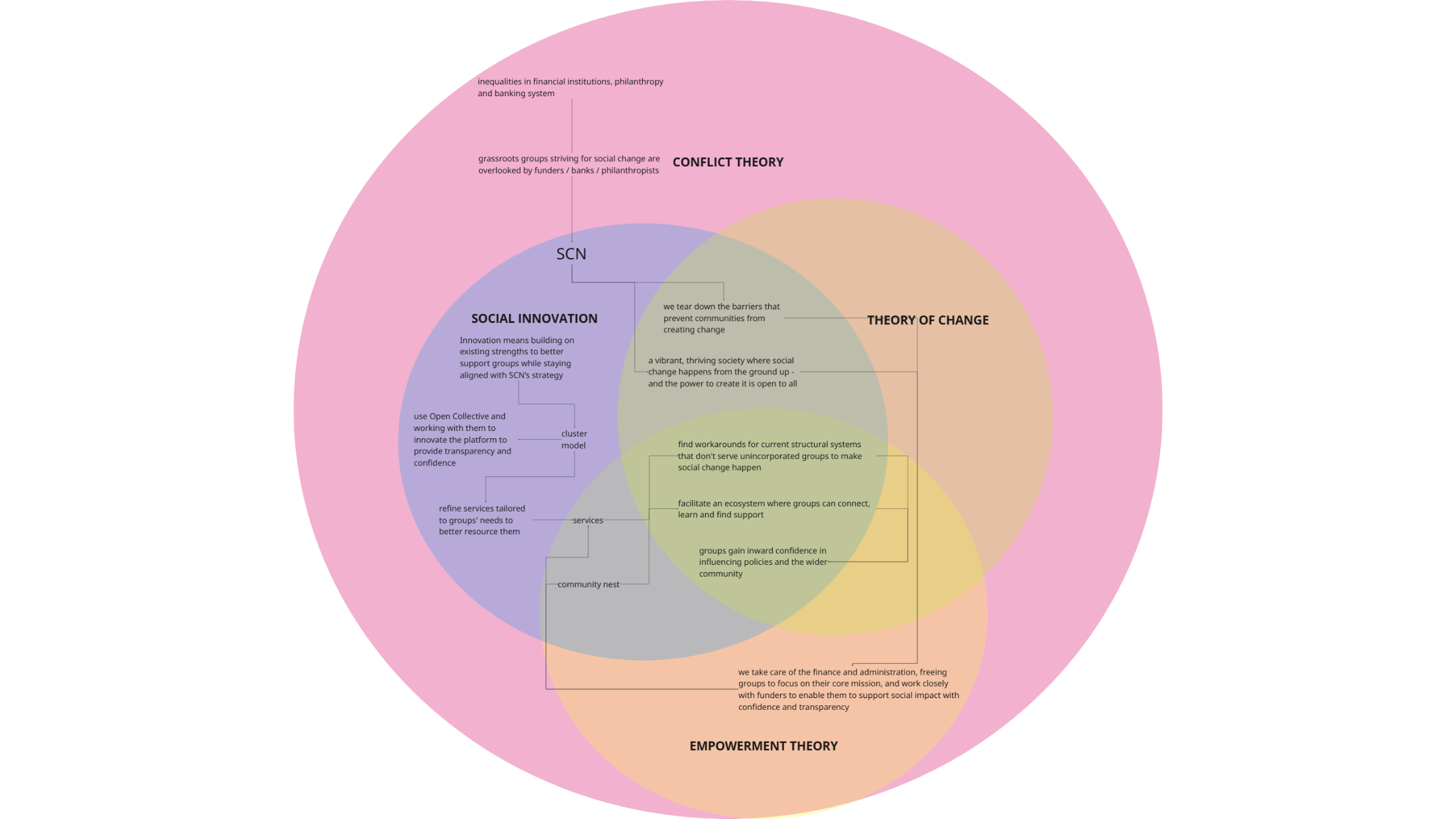
With all this information, she used Miro to map her ideas visually. Her first draft of the framework looked like a Venn diagram showing how our work connects to social change theory and our approach to innovation.
At first, it looked more like a summary of what she had learned, but with further input, she reshaped it into something more practical: a tool that turns all those insights into simple steps.
5. Refine and Adapt
A framework doesn’t need to be perfect on the first try. Yiqi refined hers by gathering opinions from the team and asking herself:
What did the different teams emphasise?
What guiding questions can help prioritise this and move someone to the next stage?
How do these questions interconnect?
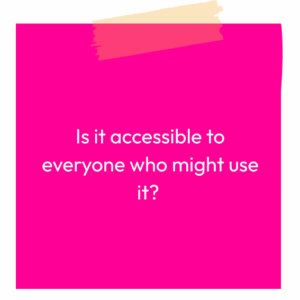
Is the framework accessible and easy for anyone to use?
Are all the stages and questions clear?
What needs refining?
She also noted how important it is to test your framework early on, even if it’s still incomplete. This is often where you start to realise what works and what doesn’t.
Inside Yiqi’s Framework
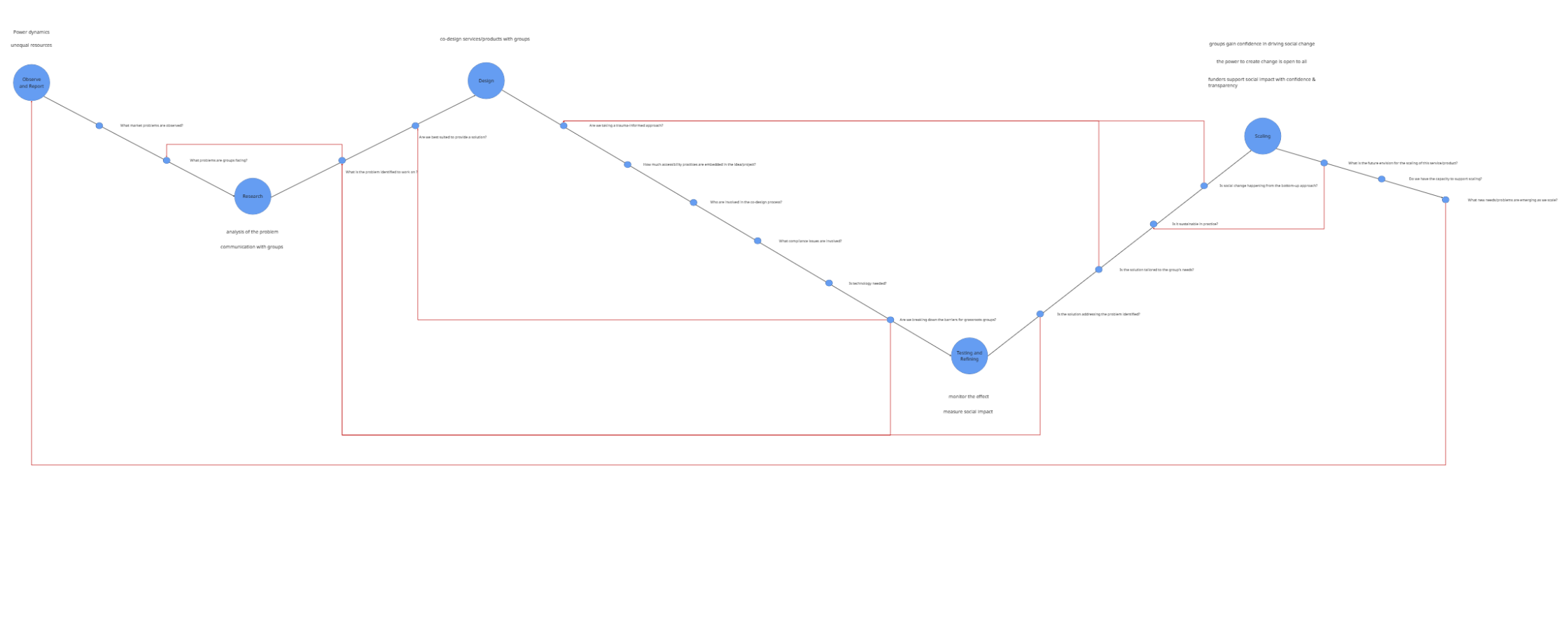
When Yiqi created our Social Innovation Framework, she looked closely at the services we provide, how we deliver them, and when. She wanted something simple enough to use across all our work, but with the flexibility to grow as projects evolve.
Her Innovation Framework serves as a baseline for how we test ideas, structured enough to guide us and open enough to adapt as things change. So what does the Innovation Framework actually look like and how do we use it?
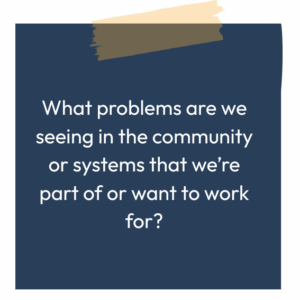
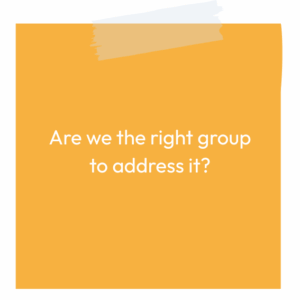
Start to understand the real problem, drawing on community insight, lived experience, and structural challenges.
Stage 2: Research
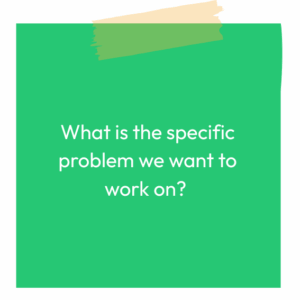
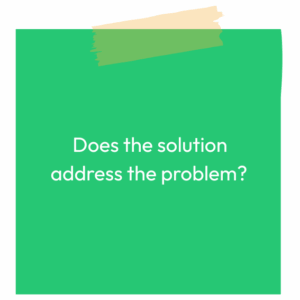
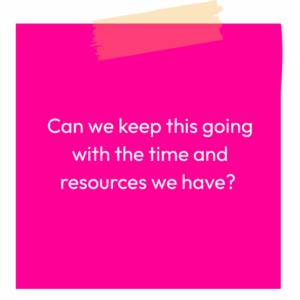
Dig deeper into the issue and explore what solutions you can offer based on your strengths and capacity.
Stage 3: Design
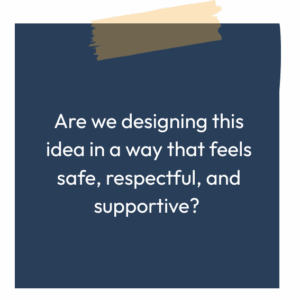
Create and co-create solutions that reflect the needs of the community you are working to support.
Stage 4: Testing and Refinement
It’s important to evaluate effectiveness by testing and refining.
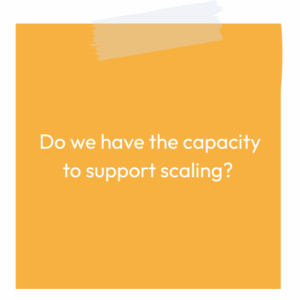
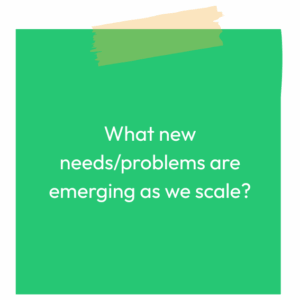
Stage 5: Scaling
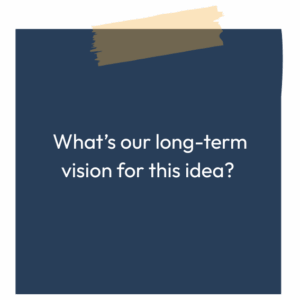
A project, product, system, or service often needs to be scaled to make a wider impact.
Different Projects, Same Approach: Framework Thinking Across Our Interns
All of our interns’ work proved that most of us use some form of Social Innovation Framework without even realising it.
Timeea, our Operations and Projects intern, started her policy audit with the same questions. What isn’t working? What do our groups need? What’s missing? She looked at what our teams do and what current legislations ask of us, and used those insights to shape an up-to-date and more inclusive policy approach. She also did the same with our intranet, asking what the team actually needed, spotting what was missing, and testing different ways of organising information.
Eilidh took the same approach in her work on the Community Nest. Instead of trying to reinvent the wheel, she asked what groups actually need and how we can address those needs through the Community Nest’s work.
Our CRM Data Standardisation intern, Elise, walked through our fiscal hosting application process like an unincorporated group would and spotted where things were tricky. She also compared different funding models, explored what helps or blocks the work of grassroots groups, and looked at our systems to see how they can work better. She essentially worked through the same steps: understand the problem, dig into the system, and identify what needs changing. what support they needed, sorted insights into themes, and generated ideas for connecting groups. Her process naturally moved through clear stages, becoming its own roadmap for building a space that’s useful for our groups.
Finally, the work of our Research Intern, Sakif, reflected the foundation of any Social Innovation Framework. By working with Brent Giving and learning directly from groups, he was able to understand the funding system and the problems within it, understanding the importance of Participatory Grant Making and its role in meeting the needs of individual grassroots movements.
Building What Works For You
Although Yiqi built the framework with our services in mind, it works just as well for grassroots ideas, giving you a simple, helpful place to start when you’re trying something new.
Your framework doesn’t need to look any particular way; it just needs to work for you. You can take our stages, adapt them, change them, and make them your own. What matters is that it helps you support your community and feel more confident in your ideas.
Following her work on the Social Innovation Framework, Yiqi was awarded an Exceptional Work Award from King’s College London. This award is based on feedback from host organisations, and we’re so happy to see her thoughtful, creative approach recognised in this way.