Collective Care As The Path And The Goal

Picture of Guest blog by Natasha Adams

Guest blog by Natasha Adams

Social Movement Researcher & Strategist

A time of polycrisis and burnout

Working in a movement space pushing back on the escalating crises of the moment can be anxiety inducing and exhausting. It’s no wonder burnout is commonplace – especially amongst those from and working with the racialised and migrant communities facing some of the sharpest attacks in this political moment, on top of historic trauma wrought by colonialism. 

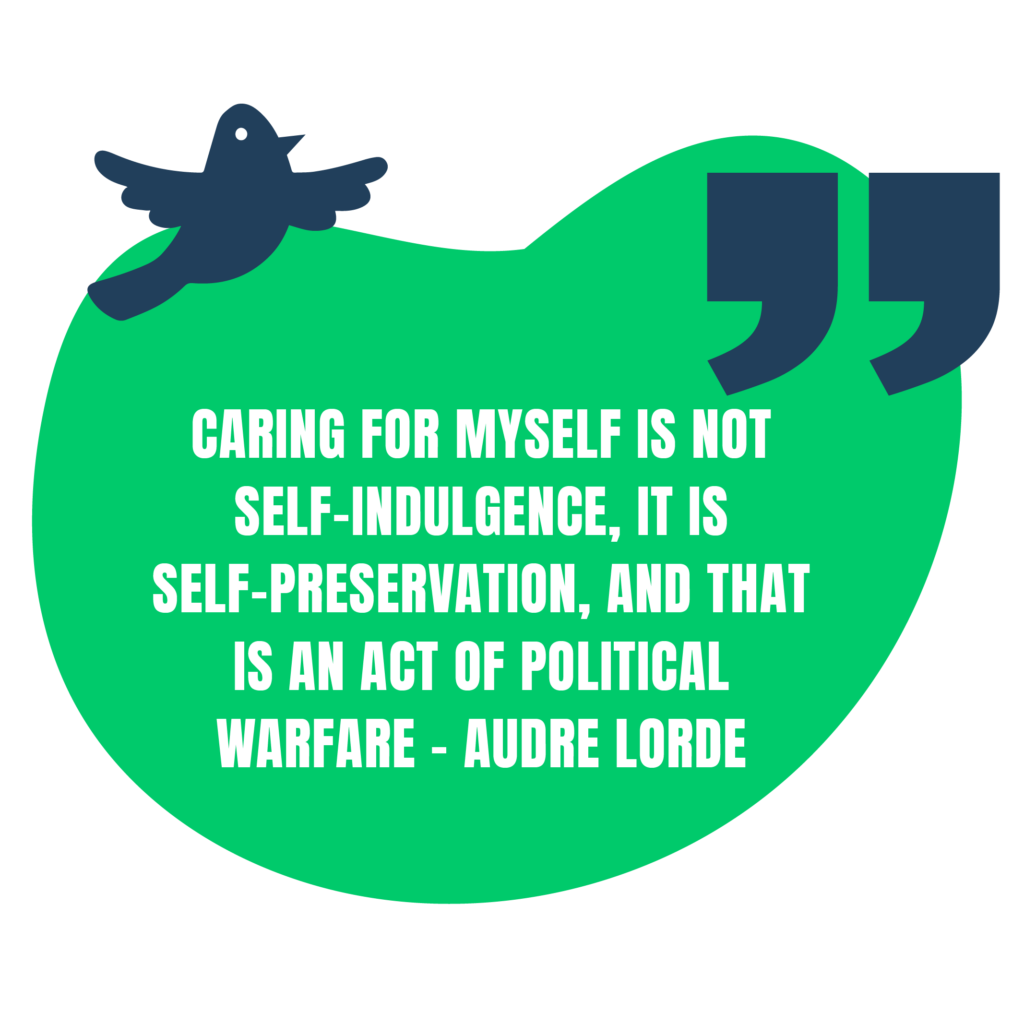
A quote bubble with the words: Caring for myself is not self-indulgence, it is self-preservation, and that is an act of political warfare - Audre Lorde


Self care has long been championed as an act of resistance. But collective care is increasingly becoming central to movement thinking and practice, recognising that to push back on the community fragmentation driven by capitalism, we need to come together to care for each other. More than enabling us to work for social change without burning out, collective care means building the social infrastructure required to transform systems over generations in a way that brings the future we’re working towards into being here and now, and that is a practice of joy.

Wild Times call us to practice collective care

The Wild Times Gathering, hosted by The Social Change Nest (on the 15th of September in Birmingham) has a strong emphasis on building regenerative futures, with training sessions, workshops, speakers and open space sessions dedicated to how we look after ourselves and each other.

Coffee, care, power and joy

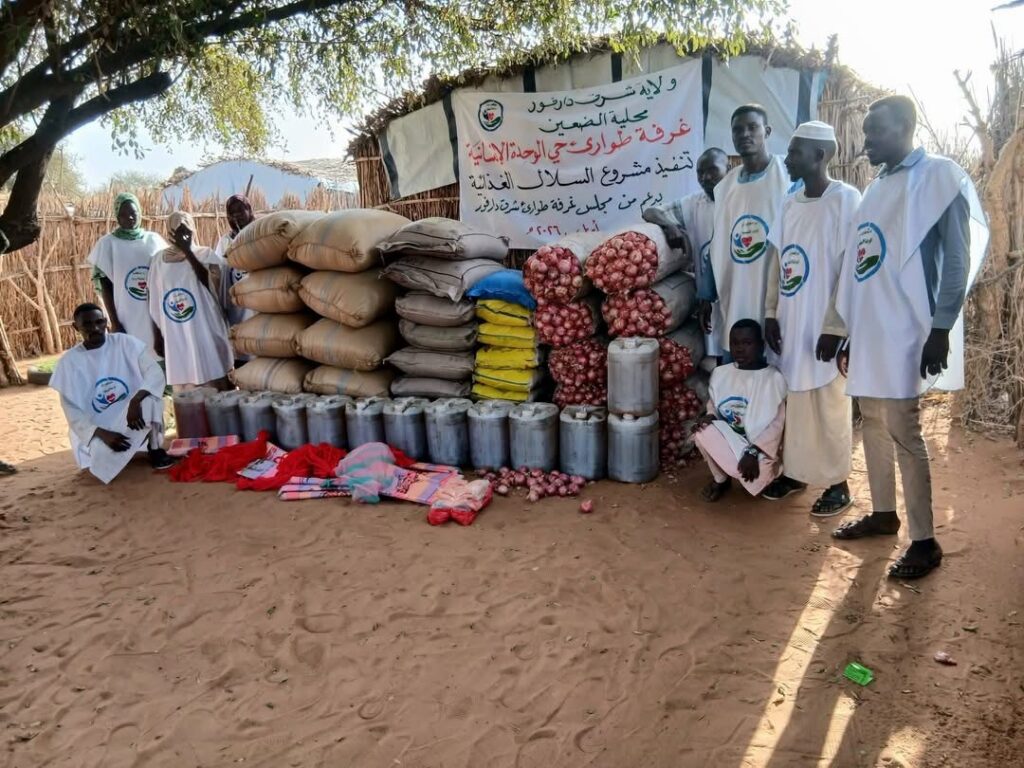
Coffee Afrik started as a crisis cafe in Hackney back in 2018, founded on the belief that the people closest to the problem are closest to the solution. Now they run over 30 projects reaching 14,000+ people every year, building community infrastructure for health justice, youth leadership, women’s power and systems change. Coffee Afrik has a project fiscally hosted by The Social Change Nest and uses the Open Collective platform to enable young people and women to manage grants for designing and running community hubs.


I spoke to co-founder Abdirahim Hassan, who was careful not to centre his own role as he explained how lived experience, community leadership, joy and healing are central to their work: “We don’t seek to control communities, we build the capacity of future leaders and gain resources for communities. We’re interested in accountability, re-imagining governance… More and more my voice is irrelevant. What’s relevant is – are we seeing more joy and healing justice across communities?”


Coffee Afrik’s projects spend a long time thinking about power, putting decisions in the hands of those that will be affected by them. Abdirahim explained to me that their respect for lived experience is part of how the organisation understands collective care. Healing justice is also central, and Abdirahim sees that as a political practice: “It is about recovering from colonialism, racism, displacement and structural violence whilst simultaneously building different futures. Our work with somatics, spirituality, faith, mediation, land, culture and community is all rooted within that understanding.”


He understands the work will bring up trauma, so he told me the community of practice uses a whole toolbox of healing approaches embedded in its work: “Collective care is embodied, it’s physical and it’s land justice, but it also means challenging systems.  We offer unlimited mental health time and unlimited holiday. You can’t do this work unless your cup is full. We see rest as resistance… We work seasonally, mindful of extraction and urgency culture, and how perfection is worshipped. We love mess, messy work, relational work, heart work… We think about how the written word is worshipped and avoid this approach, we look instead at indigenous approaches. ”


Abdirahim also sees accountability and repair, restorative justice, mediation, healthy conflict and healing justice as inseparable from collective care. At Coffee Afrik instead of reproducing carceral responses they create cultures where conflict is understood as something to navigate collectively rather than something to fear, ensuring that conversations to resolve and bridge differences and cultures are rooted in love instead of shame, often happening over shared meals. “We are building institutions. We are celebrating culture. We are laughing. We are organising. We are healing. We are sharing meals. We are imagining otherwise. That joy is deeply political.”

Embodiment, solidarity and collective care

The Hastings based Refugee Buddy Project is a refugee and migrant-led charity which supports families and individuals through buddying, advocacy, and offering financial and emotional support. I spoke with Frances Crowley, who worked as their Support Coordinator for two years. The project matches people living in Hastings with new arrivals so they can meet, get to know each other, and practice English. She continues to work with the Project, running monthly somatic workshops focused on resourcing staff, promoting wellbeing and providing reflective practice sessions with volunteer buddies.


Frances is a trained somatic Tamalpa Life /Art Process® expressive arts practitioner – a methodology with roots in artistic and therapeutic practice, using movement, visual art, and creative writing to access the wisdom of the body and the power of the imagination. She uses the Tamalpa approach in monthly staff workshops with the Refugee Buddy Project’s team. The sessions focus on the theme of embodied organisational leadership, exploring with her colleagues what creating a culture of welcome feels like in their bodies, and finding ways to embody the organisation’s values in connection with their own. As Frances explained: “The project sessions provide space and time to emphasise and explore the key qualities that the Refugee Buddy Project wants to embody – that of an organisation leading the way in transformational ways of working, where staff and colleagues are seen in their embodied, creative wholeness. Such practices aim to support both individual well-being and the ability to truly be powerful collectively.”


The workshops are trauma informed, supporting participants to regulate their nervous systems, giving people the opportunity to be in their bodies, and aiming to resource rather than challenge. Doing this work enables the team to bring their whole selves to the workplace so that they can authentically connect with each other and the communities they support. Frances sees the workshops she runs as just one element of collective care, which is embedded across the project: “It’s a foundational part of building community. By moving outside of a rigid sense of self, we realise we care for ourselves by caring for others. The feeling of solidarity makes us feel safer and happier. All the work the Refugee Buddy Project does centres collective care; the cafe, the buddying programme,  and the safe haven campaign bringing in businesses to support solidarity within the community.”

For those of you who have tickets, we look forward to seeing you at The Wild Times Gathering. If you don’t, follow us on Instagram for live updates, and keep an eye on our blog for learnings from the day.

Recommended reading from our blog

Strong Movements Start With Community

An illustration of a nest, filled with diverse characters that represent the SCN community

Facing Fear with Trust: A Conversation on Funding & Community Resilience

What happens when the biggest risk isn't funding grassroots organisations, but failing to?