
Reflections from COP30 from YOUNGO
COP30 was held in Belem, Brazil, on the edge of the Amazon rainforest in November. It attracted the most indigenous communities ever recorded at a COP event, along with many other community groups, civil society leaders and activist networks.
The 30th anniversary COP event was in the news for many reasons, with many articles including civil society activists and direct action protests, along with the fact that Fossil Fuels were not discussed. It showed that public action does have impact, and many are willing to take a stand and hold those responsible to account.
Major charities and news outlets have all had their say on what went right and wrong in Belem, but we wanted to hear directly from our groups who attended.
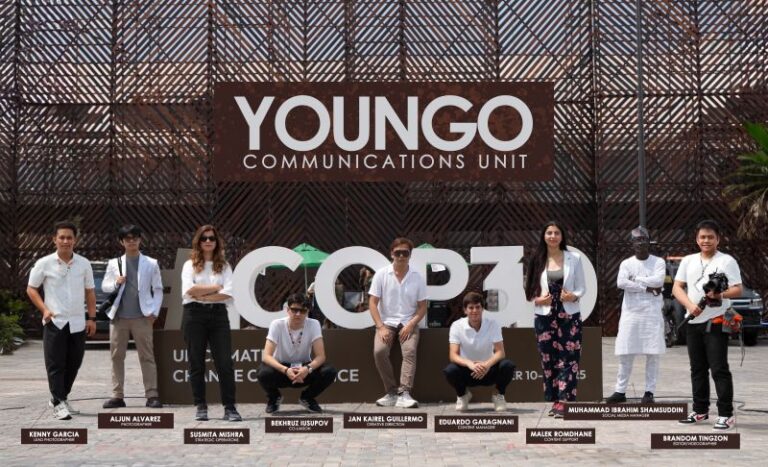
Shurabe Mercado is a climate activist and representative for YOUNGO, the official children and youth constituency of the United Nations Framework Convention on Climate Change (UNFCCC). Several members of the YOUNGO team attended COP30 in November, and Shurabe reflected their experience beautifully.
“Being at COP30 felt like stepping into the heart of the world. After years of preparation—three following negotiations from afar and more than a year training with my team—I finally set foot in the Amazon, the living lung that cries out for justice. Surrounded by the largest presence of Indigenous peoples ever seen at a COP, I felt a deep contradiction: we were in a territory where life is defended at all costs, yet the violence against Mother Earth and her protectors remains. No report or training prepares you for witnessing that gap between the sacredness of the land and the emptiness of the outcomes.
Despite all the carefully negotiated language, what dominated the final texts was evasion: ‘invite, encourage, take note’. Words that neither stop violence nor challenge extractivism, words that fail to deliver direct, accessible funding to the communities who have safeguarded these territories for generations. There was no ambition, no courage to confront fossil fuels or to guarantee the needed financing goal and mechanism. Even there, in the Amazon itself, the evidence was softened and the urgency of science ignored. And outside the conference walls, defenders kept being killed, rivers poisoned, forests destroyed.
Yet within that harshness, I also found a source of strength that no formal decision can overshadow: community. In the exhaustion, the sleepless nights, the emotional weight of witnessing another round of diluted commitments, I found grounding in my team and in the collective force of youth and frontline communities. In the embraces that held us together, the tears we shared without shame, the mutual care that kept us moving, there lived the real power. What sustained me was not the plenaries, but the solidarity woven in the actions, in the hallways, in every moment where we reminded each other why we refuse to give up.
My first COP taught me that the real fight begins after the cameras turn off. We did not come to ask for permission, we came to demand accountability. COP30 was not an aspirational summit; it was a reminder of how much remains unaddressed and how heavy the intergenerational debt truly is. As we return to our territories, we carry a renewed commitment to resist, to connect our struggles, and to build the world we deserve, one where life is at the center, and where climate justice is not a slogan but a lived reality.”
If you also attended COP30 and would like to share your experience, please contact hello@thesocialchangenest.org. We would love to hear from you!

