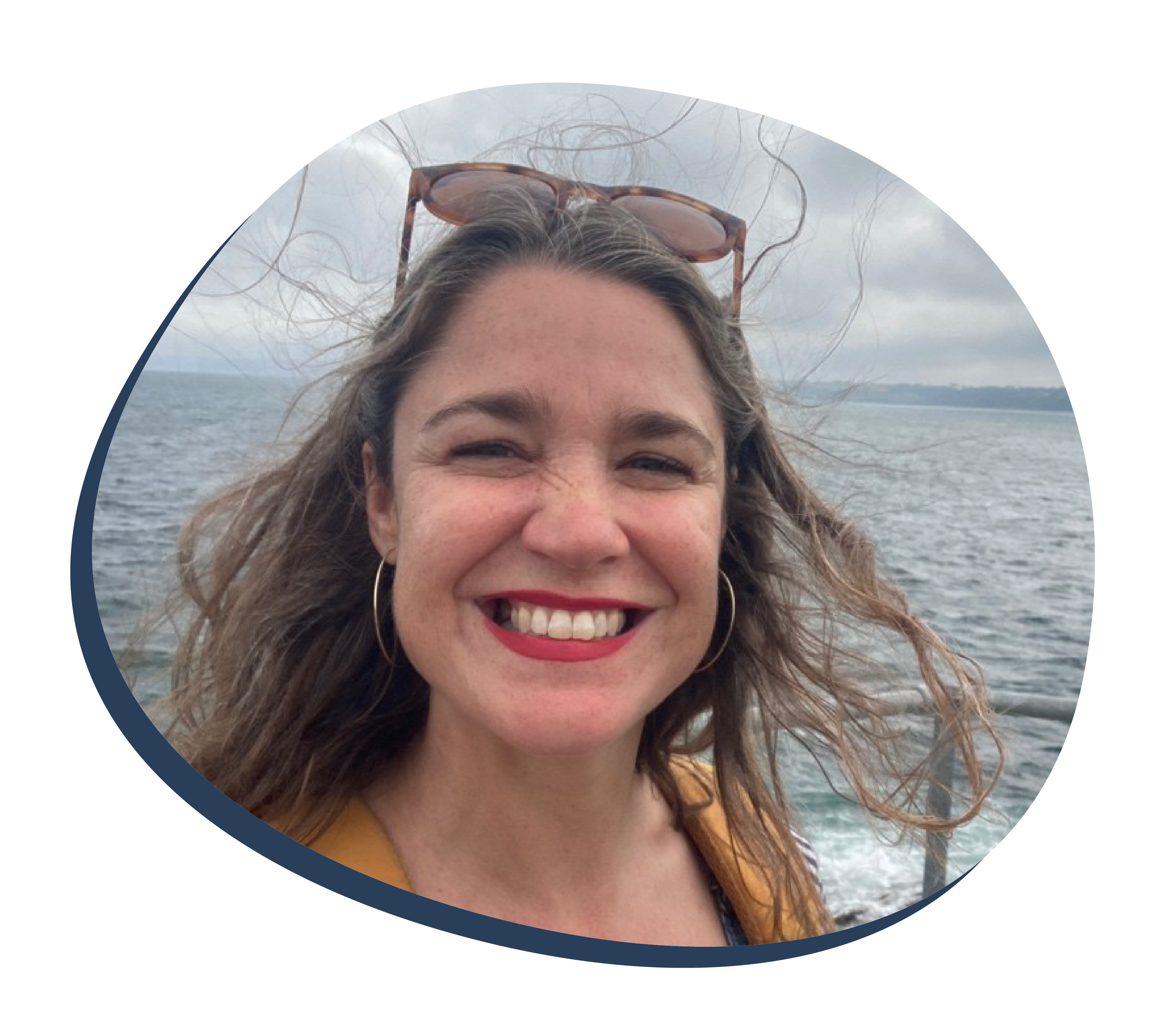
I spoke to Anthea Lawson, experienced changemaker and author of the excellent ‘How Not to Save the World’ about her involvement with Common Ground – a volunteer run project which takes political questions onto high streets to draw people into conversation about what is actually important to them.
Common Ground builds on a tool developed by the South Devon Primary, a successful community project which ousted a sitting Conservative MP through formation of a progressive voting block during the 2024 general election.
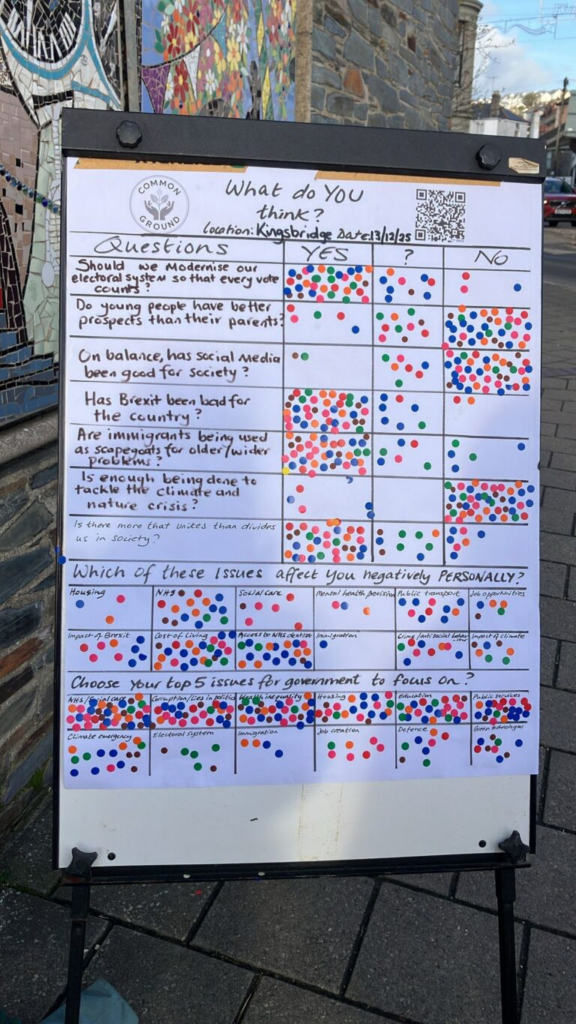 Volunteers (3 at a time) take to their local high street with questions written up on a flip chart and a supply of sticky dots. They ask passers by to place a dot to say whether they agree, disagree or don’t know about statements on topical issues – things like the scapegoating of migrants, the prospects of younger people, Brexit and climate change (see the picture for an example). Then if people are up for sharing more about their thoughts, the volunteers start by listening, building rapport and connection, before gently countering any obvious disinformation and sharing their own views. The approach really works to engage across differences of opinion and to move towards finding common ground. As Anthea told me:
“When people say things I disagree with, I paraphrase what they’ve said and repeat back to check I understand and then say ‘The thing that worries me is…’. Not ‘Did you know that…’ I share my own fears and feelings. Often you find a bunch of things you agree on, even if not everything.”
The project affords all participants, both volunteers and passersby, the opportunity to experience themselves as someone who has political views and political agency, as well as space to think through their political views in conversation without fear of judgement. These opportunities are often lacking in people’s lives.
One of the clear takeaways Anthea shared from her time volunteering on the project is that most people care about the same things, and while the far right can hook their agenda into these common concerns, this isn’t an inevitable process. It can be interrupted. To quote Anthea again:
“Most people want the same things; to live with dignity, look after their family, have enough cash left for a bit of fun, do work that’s not rubbish and live in a place that’s safe and pleasant. Of course people do have different ideas about how to get there, but most don’t have strong ideological views. What we’re really seeing close up is the effect of the manipulation that goes on. Our political views consist of things we’re being bombarded with, everything we’ve heard on the surface – then there’s all the stuff underneath which is a great mixture – our class background, parents and family, work, life, material struggles, personality. What Reform are doing is hooking their agenda on to the top level of that. We need to interrupt it… The conversations give me great hope.”